


A youth newsroom nearly a decade in the making shut down. A fortnight later, its star reporter won her second national award for the work that no longer existed. She’s still, stubbornly, hopeful.
I was at a panel on the future of media not long ago. A row of old hands, me included if I’m honest about my age bracket, talking about where news goes next. There was one young person on the panel, and every time she spoke the whole room leaned in. Like she was a time traveller and we all wanted to know what the future looked like from where she was standing.
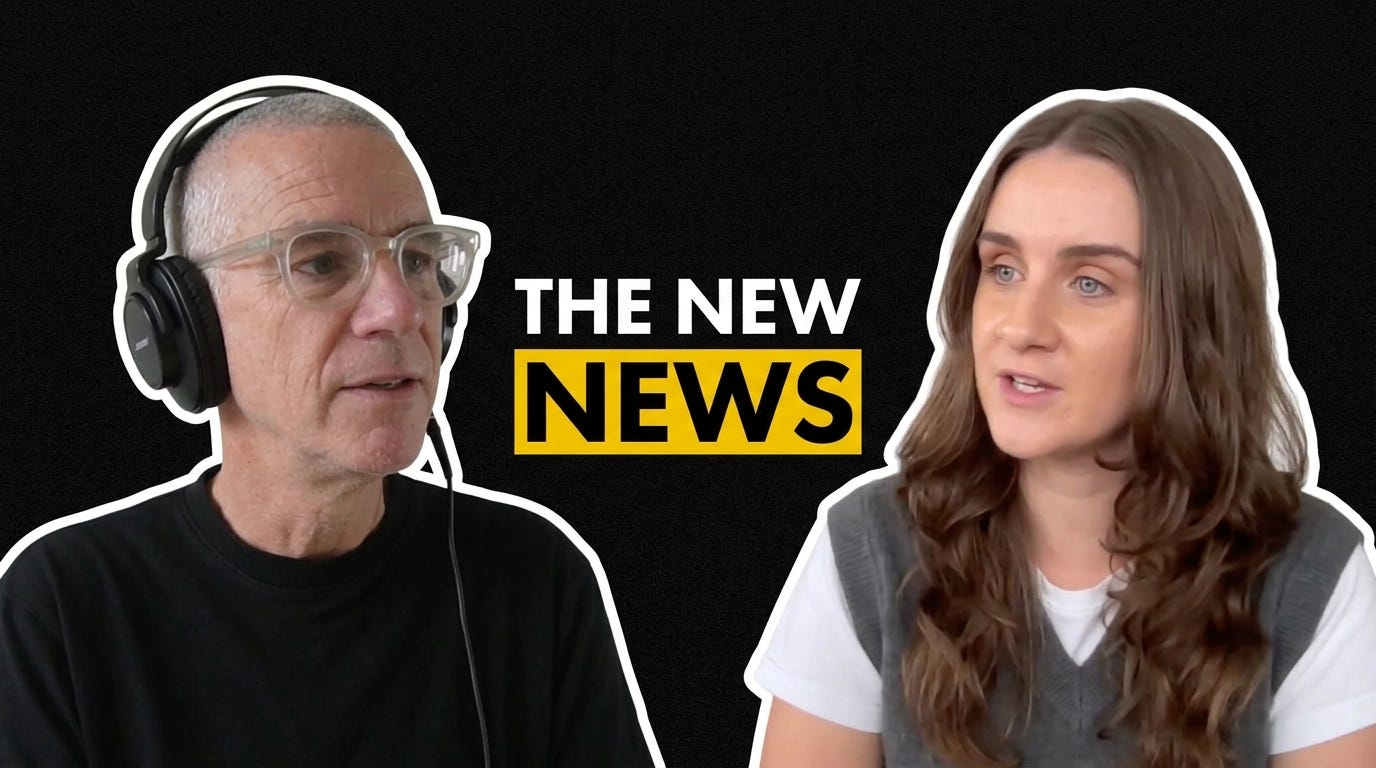
That was Zoe Madden-Smith. So I got her on the podcast to ask properly.
Zoe’s spent nearly ten years in journalism, most of them at Re: News, TVNZ’s youth platform, the place she calls where she “cut her teeth.” Cut from a team of twelve down to three over several rounds of restructures, until there was nothing left to restructure. Then Re: News was gone altogether. Two weeks later, she won Video Journalist of the Year at the NZ Media Awards. Her second one in a row. For a job that no longer existed.
“People kept mentioning, do you know you’re living the plot of Devil Wears Prada 2,” she told me. “Essentially she wins an award right after being let go.” But the timing wasn’t lost on her. Winning big two weeks after losing your job opens doors, she reckons, and it stings in exactly the way you’d expect.
Zoe doesn’t think young people are the problem. She thinks the business model is.
“Youth media is actually just really good journalism that’s usually told from a youth perspective but appeals to other people as well.”
She pointed to the Cornell 7 story, which broke through a student newspaper. Nobody asks whether that story counts as “serious” journalism because a twenty-year-old broke it. It’s just journalism. The audience was there too. Re: News matched or beat mainstream platforms on social engagement, with a fraction of the staff and budget. The problem was never that young people wouldn’t watch the news. It’s that advertisers couldn’t figure out how to pay for an audience that can smell a sponsored post from across the room.
Which is its own trap. Mainstream media looks at youth coverage and assumes it should be cheap. “Here’s an iPhone, go out and get some Vox Pops,” as Zoe put it. Dumb it down, keep it short, and somewhere along the way you’ve told your audience you don’t take them seriously. “We’re marketing it as throwaway content.” Treat an audience as disposable and don’t be surprised when they decide you’re not worth their time either.
What struck me wasn’t the critique. It was that she’s not bitter about it. She’s now freelancing, and genuinely excited about the work ahead: longer-form video, documentary, the kind of human story and shoe-leather investigation that’s expensive to make and hard for AI to fake. “I think there is a push towards more human stories and investigations because that’s gonna be a lot harder for AI to take.”
A few things worth stealing
The audience was never the excuse. Zoe’s clearest point: don’t blame the people you’re trying to reach for a funding model that doesn’t work. If the platform proved engagement and still couldn’t survive, that’s a business problem not an audience problem.
Cheap and youth-friendly aren’t the same thing. Treating any audience as if it deserves less effort, less resource, less respect, tends to become a self-fulfilling prophecy. They notice. They leave.
Trust runs both ways. Zoe’s line stuck with me: journalism doesn’t exist without an audience, and an audience that won’t engage leaves journalism with nothing to source from either.
Hope isn’t the same as denial. She’s lived a platform’s full rise and fall and still believes the work matters. Not because she’s naive about the money. Because she’s seen, firsthand, that the audience was real.


