


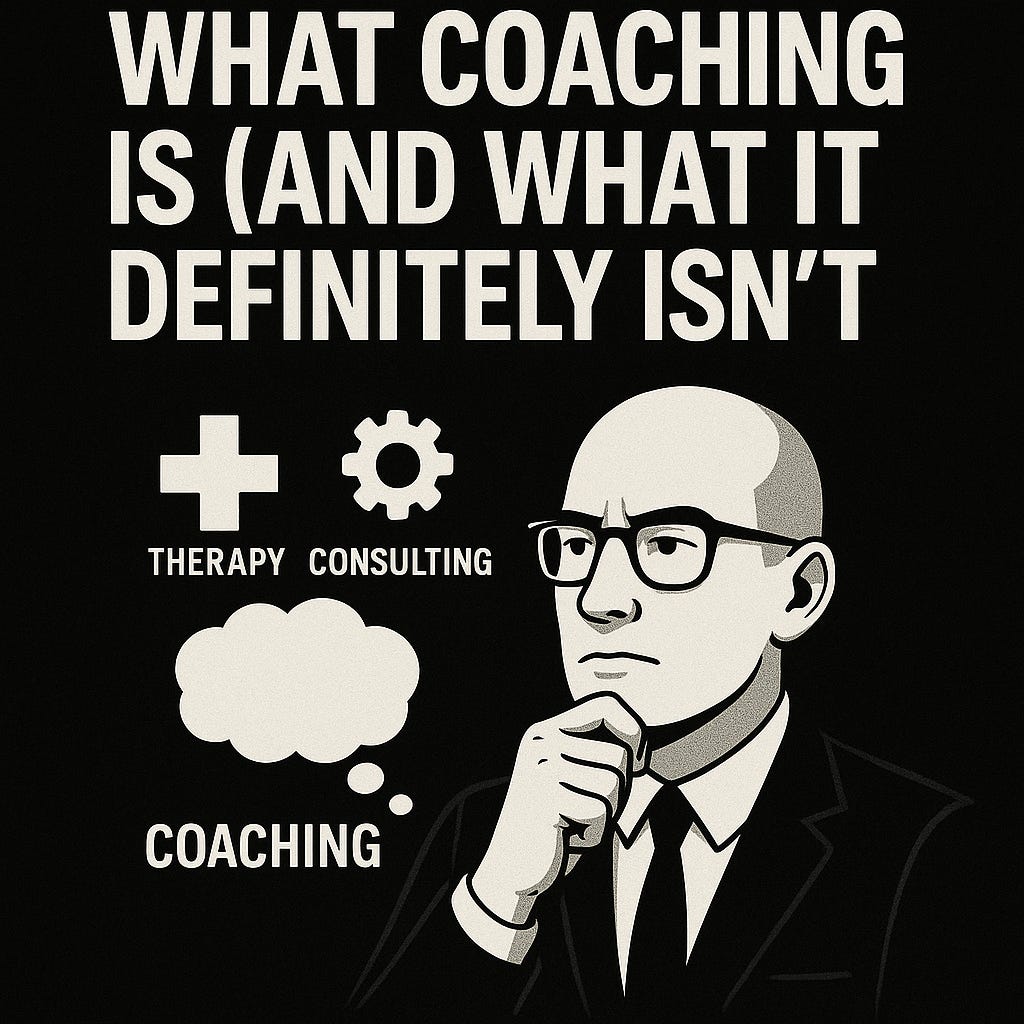
Let’s start with a little myth-busting. Coaching isn’t therapy. It’s not consulting either. And you can’t just slap the word “coach” on your LinkedIn and call it a day.
Therapy is for unpacking past baggage and healing your mental health. Consulting is for people who love to provide step-by-step plans and answers—sometimes without you even asking.
Coaching? That’s a different beast entirely.
Coaching is about digging out your own answers, not borrowing someone else’s playbook.
Here’s how the International Coaching Federation (ICF) puts it: “Partnering with clients in a thought-provoking and creative process that inspires them to maximize their personal and professional potential…producing fulfilling results in their lives, careers, businesses, or organizations.”
Translation: Coaching helps you figure your sh*t out, create alignment with what actually matters to you, and move forward with purpose instead of just spinning your wheels.
The Secret Sauce: Alignment
What’s the magic behind coaching? Alignment. When your goals line up with your core values, things start clicking. You’re not just chasing someone else’s definition of success; you’re designing your own. Less resistance, more momentum. (And hey, maybe less Sunday-night dread.)
How do you achieve this mystical alignment? Reflection. Deep thinking. Real talk with yourself usually prompted by someone who knows how to nudge (read: a coach).
When your goals match your values, you move from “meh” to meaningful.
Try this
Grab a piece of paper and jot down:
One goal you’re chasing right now
Why it actually matters to you (or, honestly, if it doesn’t)
If the “why” feels weak, dig deeper—or pick a new goal. Alignment is everything.
Listening That Goes Beyond “Uh-Huh”
Most people listen just enough to reply. Coaches listen to actually, you know, understand. The ICF calls this “Level 2 Listening.”
Level 1 is about you. (“How does this relate to me?”) Level 2 is about the other person. (“What’s really going on for them?”)
A great coach asks:
What are you saying—and not saying?
What’s behind the words?
Where’s the real story hiding?
The right kind of listening is like sonar: it picks up what’s beneath the surface.
Ask, Don’t Tell: Powerful Questions Matter
Here’s where coaching can mess with your comfort zone in the best way. It’s not about handing over quick fixes. It’s about questions that force you to think.
“What else?”
“Why is this important to you?”
“When you say [X], what do you mean?”
Get ready to spend more time pausing, reflecting, and sometimes squirming. That’s how breakthroughs happen.
Try this
Next time you catch yourself complaining (or doomscrolling), ask:
“What’s one thing I could do differently?”
“What’s actually within my control here?” Notice how your energy shifts.
Positive Psychology: Not Toxic Positivity
Let’s be clear: Coaching isn’t about painting a fake smile over real problems. It’s about helping you see your strengths, get clear on where you are, and map out where you want to go. Positive psychology is the engine—it keeps you moving forward.
Think of it as “let’s use what’s working” instead of “let’s obsess over what’s broken.”
Does Coaching Actually Work? (Yes. Science Says So.)
If you’re a “show me the data” type here you go. Study after study says coaching delivers the goods:
Productivity goes up
Teams get more engaged
Customer satisfaction improves
And personally? Better well-being, higher career satisfaction, and more goals actually reached (instead of sitting as “someday/maybe” in your Evernote).
Case in point: A big review by Dr. Simmy Grover and Professor Adrian Furnham at UCL found that coaching consistently boosts well-being, satisfaction, and actual results at work and beyond. (These aren’t self-help TikTokers—these folks know their science.)
Turns out “talking it out” with a coach isn’t just warm and fuzzy—it’s measurable progress.
Why Coaching Works, Summed Up
Here’s what really moves the needle:
Deep, focused listening (Level 2)
Big, uncomfortable questions
A strengths-based, positive psychology boost
All wrapped up in a supportive, “let’s get real” relationship
That combo creates a space where you can reflect, recalibrate, and then take action that actually matters to you.
So, the next time you hear someone use “coach” and “guru” interchangeably, you know better. Real coaching is about sparking your own answers—and moving you from stuck to seriously satisfied, in work and in life.
Try this
Share this with someone who needs a reality check on what coaching really is. Or, if you’re coach-curious, book a consultation and see what all the fuss is about. You’ve got nothing to lose except maybe an old story that’s holding you back.
Coaching isn’t just for the lost, it’s for the ready. The question is: are you?
If your having trouble sticking to your goals try this free mini course. How To Be A High Performer In Times Of Change