


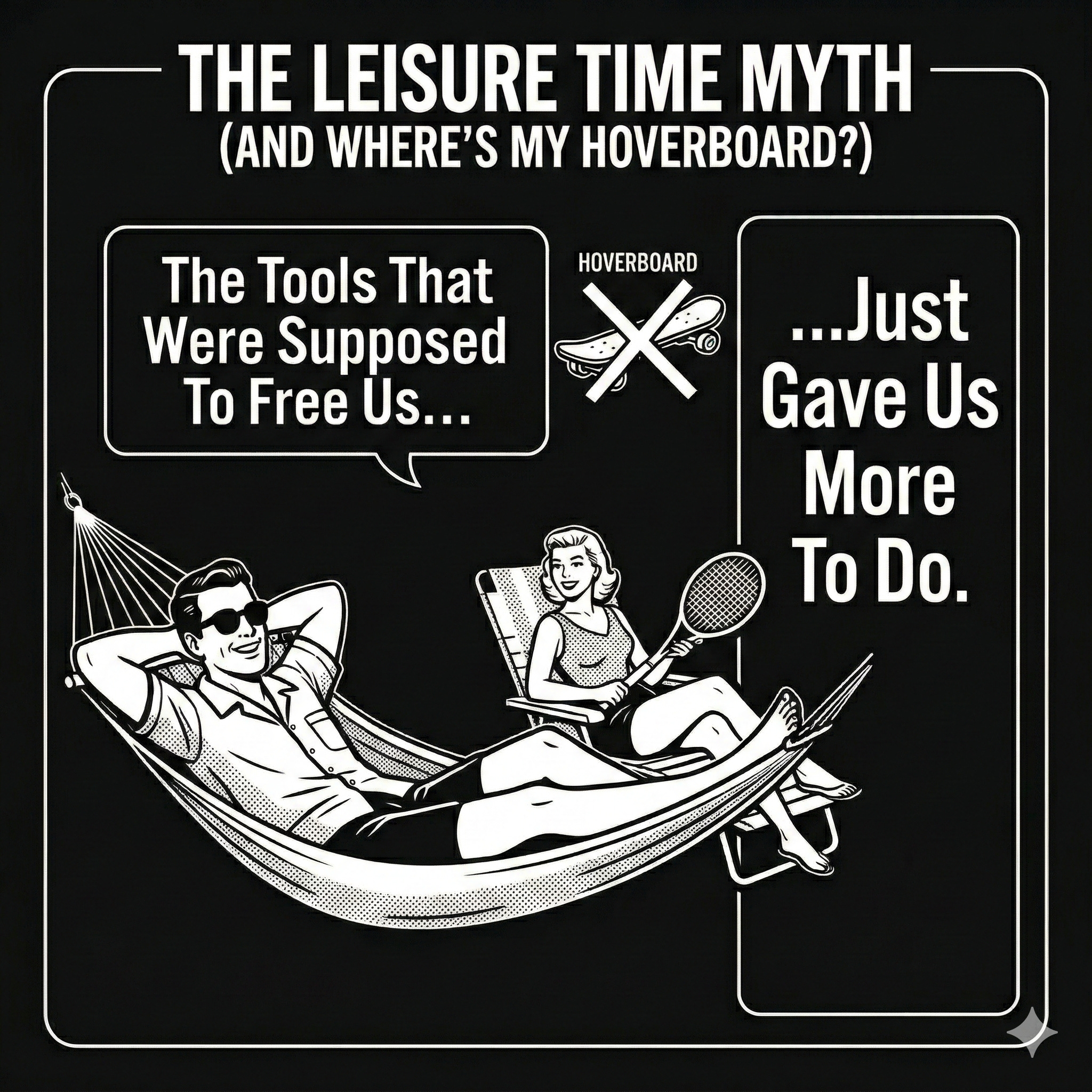
I remember being made to watch a film in Social Studies class about how computers would give us all more leisure time. The film featured images of middle-aged folk playing tennis and lounging by the pool. Smoking, naturally.
Of all the things that never happened, leisure time is one of them. The other is hoverboards.
Computers did change the nature of work, think the typing pool (kids, ask your parents). But what they actually did was shift workers to different tasks, not fewer of them. I’m not spending my days poolside. In fact, as a workforce, we’ve never been busier. The tools that were supposed to free us just gave us more to do.
“The tools that were supposed to free us just gave us more to do.”
The Only Thing That’s Constant Is Change
We’re on the precipice of another radical shift. But what that looks like is far from clear and there are a lot of people with strong financial interests telling you otherwise. Remember: those people are trying to sell you something.
The masters of the universe breathlessly announcing we’re moments away from AGI (artificial general intelligence) are way out over their skis trying to justify their near trillion dollar company valuations. Nick Frosst, co-founder of Cohere a company that builds large language models and enterprise AI tools has a far more grounded take. In a recent interview with Ed Elson on First Time Founders, he said:
“I don’t think the technology is gonna get us to AGI, and I don’t think the biggest utility of the models is in people’s personal lives. I think the biggest utility of these models is in work.”
That’s not a headline. That’s not a TED Talk moment. But it’s probably closer to the truth than anything Elon or Altman has posted this week.
“There are a lot of people with strong financial interests telling you how they’re going to change the world. Remember: those people are trying to sell you something.”
Try this: Next time someone tells you AI is going to replace your job or revolutionise your industry overnight, ask yourself: what are they selling? Follow the money before you follow the hype.
So What Can You Actually Do?
Here’s the honest answer: stay curious, stay sceptical, and stay close to the work that actually matters to people. AI is genuinely useful, but mostly as a tool that makes skilled humans faster, not as a replacement for them. The professionals who’ll thrive in the next decade aren’t the ones who panic-pivot into tech, they’re the ones who figure out how to use these tools without losing what makes them valuable in the first place.
That means doubling down on your judgement, your relationships, and your ability to solve real problems for real people. Those things don’t get automated.
Try this: Write down three things you do in your work that require genuine human judgement or trust. Those are your anchors. Build from there.
And Where’s My Leisure Time? (And My Hoverboard?)
Still not here. Probably not coming. But here’s the reframe: maybe the goal was never leisure time. Maybe it was meaningful time, work that doesn’t feel like a grind because it’s actually aligned with who you are and what you’re good at.
That’s the real promise of this moment. Not that the machines will do everything for you. But that you finally have enough tools, enough information, and if you’re reading this, enough self-awareness to build something that actually fits.
The hoverboard can wait.
If you’re interested in the interview with Nick Frosst you can watch it here First Time Founders
“Maybe the goal was never leisure time. Maybe it was meaningful time -- work that doesn’t feel like a grind because it’s actually aligned with who you are.”
Try this: If you had an extra five hours a week, what would you actually do with them? Be honest. That answer tells you more about your next move than any career quiz ever will.