


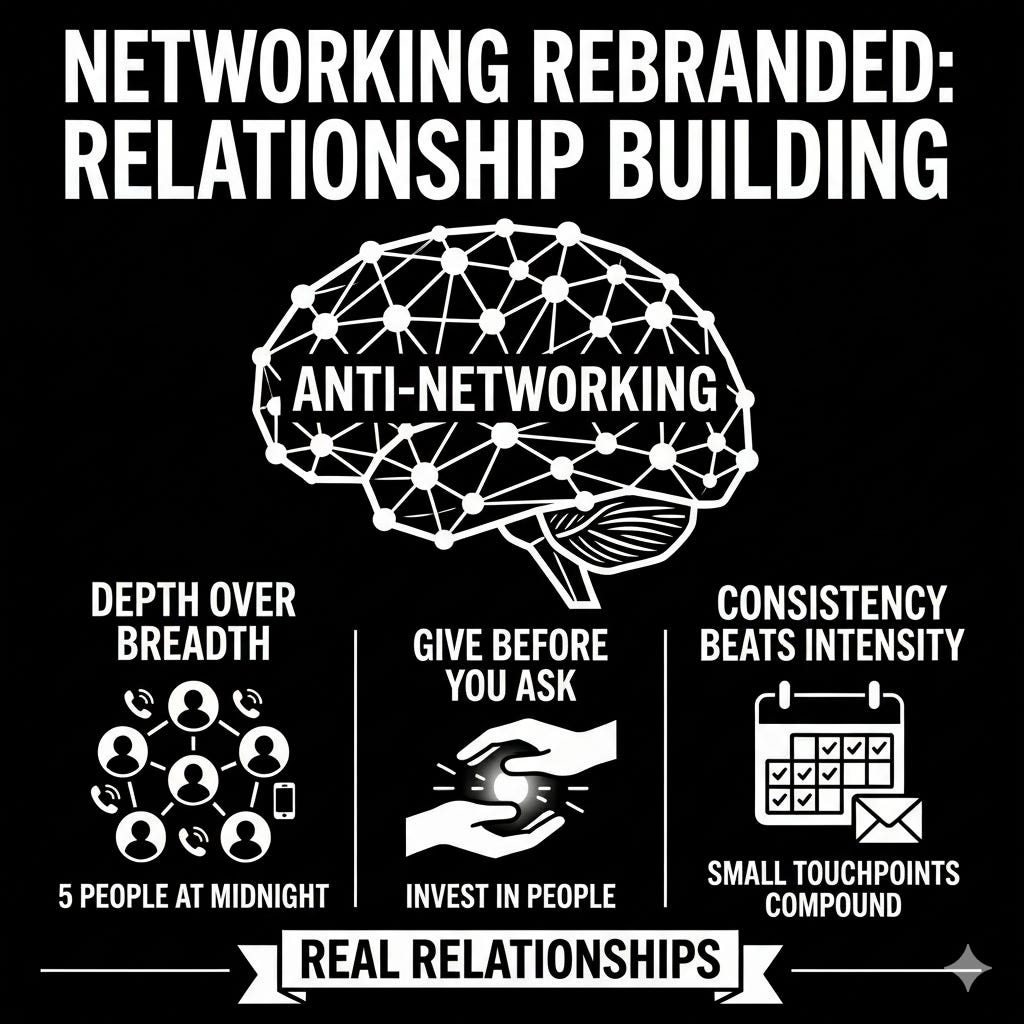
A few weeks ago on the podcast, Sonya Wilson and I joked about how much we both absolutely loathe networking. The problem, as I admitted at the time, is that networking is actually important. I joked that we need a new marketing campaign to rebrand what is, for many of us, a truly horrible experience.
For years, we’ve been told to collect business cards like cereal box collectables. we’ve attended industry events, made small talk over warm wine, and dutifully followed up with generic LinkedIn messages. I don’t know about you, but the mere thought of it makes me want to throw up in my mouth. It feels performative, shallow, and frankly, a bit desperate.
The Networking Strategy We Were Sold
Traditional networking advice is relentless. It tells you to attend every industry event, connect with everyone, always be on, and collect contacts like trophies. The mantra is always to build your network before you need it. This advice isn’t necessarily wrong, it’s just incomplete. For those of us past forty, it’s exhausting and often counterproductive. We don’t have the time or the patience for the hustle anymore. Here is what they don’t tell you: breadth without depth is just a really just big list of names.
Breadth without depth is just a really big list of names.
Contact Curation
I’m still working on a better name for this, so suggestions are welcome, but let us call it Contact Curation for now. Curating a quality, varied contact group is infinitely more valuable than a Rolodex maxed out with names and email addresses (kids ask your parents what a Rolodex is). You want actual networks that span across industries and specialities: people with a wide, useful view of what is happening in your sphere and beyond.
The Three Principles of Anti-Networking
1. Depth Over Breadth
You don’t need five hundred LinkedIn connections. You need five people who would take your call at midnight. If you are pivoting or reinventing yourself, you need advocates, not just acquaintances.
You do not need 500 LinkedIn connections. You need five people who would take your call at midnight.
Try this: Make a list of the ten to fifteen people whose work you admire, who energise you when you talk to them, or who would genuinely want to help you succeed. These are your people. Everyone else is just noise. Focus your energy here first.
2. Give Before You Ask
The fastest way to kill a relationship is to only show up when you need something. It’s transparent and it’s tacky. Instead, become genuinely useful to the people in your circle. Share articles they would find valuable. Make introductions that benefit them. Celebrate their wins. Offer feedback when they ask for it. When you lead with value, you are not using people: you are investing in them.
3. Consistency Beats Intensity
Grand gestures are memorable, but small, consistent touchpoints are what actually build relationships. A thoughtful text every few months beats an annual “we should catch up” email that never actually leads to a meeting.
Try this: Set a monthly reminder to reach out to two or three people in your circle. Do not ask for anything. Just check in, share something relevant, or let them know you were thinking of them. It takes ten minutes, but it is worth more than any networking event you will ever attend.
The Itzler Method
Jesse Itzler is a networking genius: have a search for him online if you do not know the name. Each year, he sits down and handwrites notes to people to thank them. He’s done this for years and it’s brilliant. Who doesn’t love getting an actual card in the mail? It’s so rare these days, and it builds a massive reservoir of goodwill. It shows you took the time to think, to write, and to post. That effort is recognised and remembered.
Small, consistent touchpoints build relationships that grand gestures cannot touch.
The Compound Effect of Real Relationships
When you shift from networking to relationship building, the shift in your professional life is palpable. Opportunities start coming to you instead of you having to chase them down. Conversations become more meaningful and energising because they are based on mutual respect rather than mutual gain. Your reputation grows through genuine advocacy, not self-promotion.
Most importantly, you build a support system that sustains you through transitions. You stop feeling like you are using people and start feeling like you are building something real. The best part is that this approach gets easier over time. Every conversation deepens the relationship. Every value exchange builds more trust. Every small touchpoint compounds.
You are not starting over. You are building on decades of relationships that already exist, just waiting to be nurtured. It is never too late to stop networking and start building relationships that actually matter.